
The Ultimate Guide to a Healthy Vegan Diet

Transitioning to a vegan diet can seem overwhelming, but with the right information and guidance, it can be a healthy and rewarding lifestyle change.
In this article, we’ll answer common questions about vegan nutrition and provide tips on how to go vegan the healthy way.
Understanding Vegan Nutrition

Eating More Without Gaining Weight
One of the benefits of a vegan diet is that you can eat more food without gaining much weight. Vegan foods are typically lower in calories but higher in volume, meaning you can feel satisfied while consuming fewer calories.
Plant-based foods, such as vegetables, fruits, whole grains, and legumes, are naturally lower in calories compared to animal-based foods, allowing you to enjoy larger portions.
Essential Amino Acids
There are eight essential amino acids that our bodies cannot produce, so we must obtain them from our diet.
While animal-based foods are considered complete proteins because they contain all eight essential amino acids, plant-based foods can also provide all essential amino acids if you consume a variety of sources, such as beans, lentils, whole grains, nuts, seeds, soy, tofu, and tempeh.
A well-planned vegan diet ensures you receive all necessary nutrients without the need for animal products.
The Importance of Quality Carbs
Carbohydrates are an essential part of a healthy diet. Focus on whole grain carbs like brown rice, whole wheat bread, and quinoa, which are rich in fiber and B vitamins. Limit refined carbs like white bread and pasta, as they lack these nutrients.
A vegan diet rich in whole grains supports digestive health and provides sustained energy.
Key Nutrients on a Vegan Diet
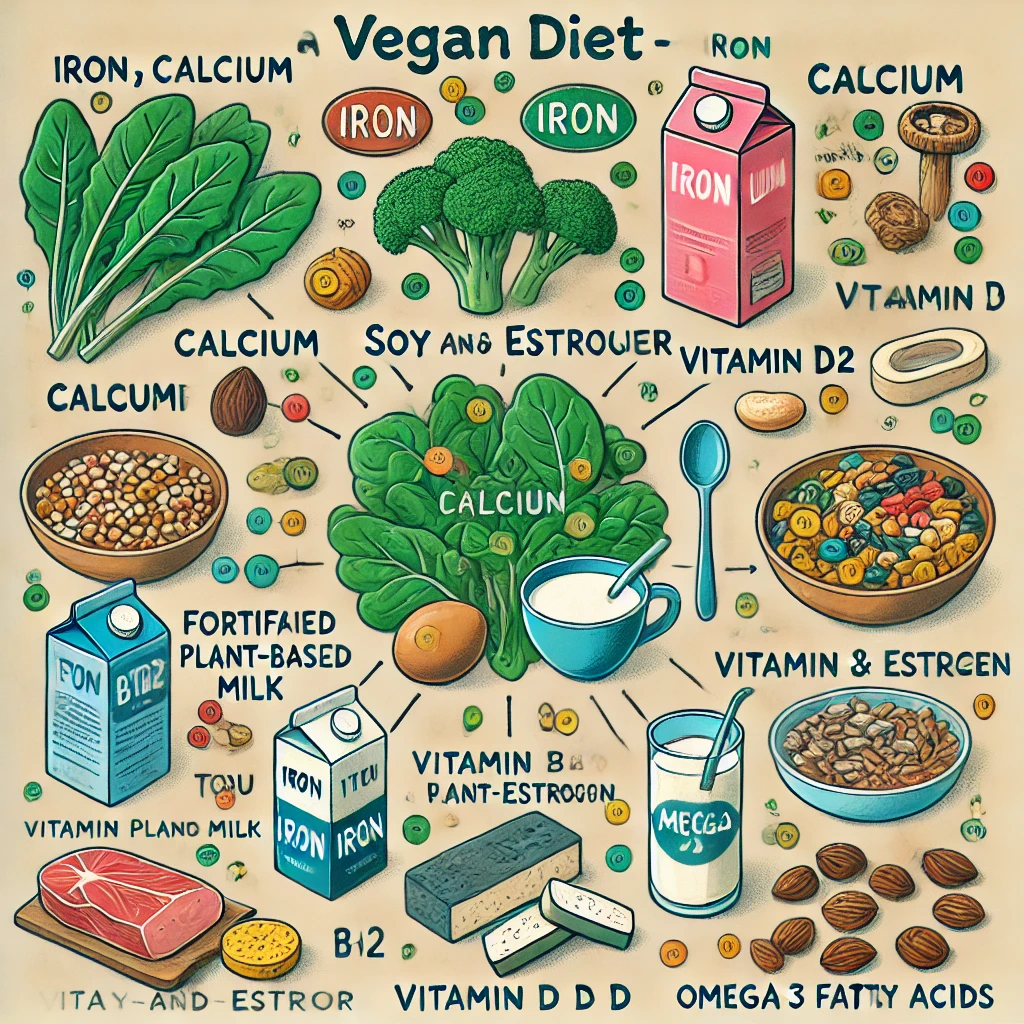
Iron
Plant-based sources of iron include dark green leafy vegetables, beans, and lentils. To enhance iron absorption, pair these foods with vitamin C-rich foods like tomatoes or strawberries.
Iron is crucial for maintaining healthy blood and energy levels, and a vegan diet can provide adequate iron through thoughtful food combinations.
Calcium
Contrary to popular belief, you don’t need dairy to get enough calcium. Dark green leafy vegetables and fortified nondairy milks are excellent sources of calcium.
A vegan diet can support bone health effectively when these calcium-rich foods are included regularly.
Soy and Estrogen
Soy foods are safe and nutritious. Phytoestrogen in soy mimics real estrogen but can help regulate the amount of estrogen in your body.
Prioritize wholesome forms of soy like edamame and tempeh, and limit highly processed imitation meats. Including soy in your vegan diet can provide high-quality protein and various health benefits.
Vitamin B12
Vitamin B12 is crucial for red blood cells, circulatory health, and brain function. Since B12 is typically obtained from animal foods, vegans should consider supplementing with methylated B12, nutritional yeast, or fortified nondairy milks.
Ensuring adequate B12 intake is essential for maintaining overall health on a vegan diet.
Omega-3 Fatty Acids
There are three types of omega-3 fatty acids: ALA, EPA, and DHA. While ALA is found in plant-based foods like walnuts and flax seeds, your body can convert it to DHA and EPA.
You can also take an algae-based supplement if needed. Including omega-3-rich foods in your vegan diet supports heart and brain health.
Vitamin D
Vitamin D is produced by the body when exposed to sunlight, but supplementation may be necessary during certain times of the year or in certain regions.
Fortified nondairy milks can also provide vitamin D. A vegan diet supplemented with vitamin D ensures you maintain healthy bones and immune function.
Healthy Vegan Pregnancy
It’s possible to have a healthy pregnancy on a vegan diet, but it’s important to be intentional with your food choices and work closely with a doctor and dietitian to ensure you’re meeting your increased nutritional needs. A well-balanced vegan diet can support both mother and baby during pregnancy.
Additional Benefits of a Vegan Diet
A vegan diet offers many benefits beyond personal health, including animal welfare, environmental sustainability, and even human welfare.
Adopting a vegan lifestyle contributes to reducing your carbon footprint and promoting ethical treatment of animals, which can enhance your overall sense of well-being.
Tips for Transitioning to a Vegan Diet
• Start Small: Begin by replacing one meal a day with a plant-based option.
• Make Simple Swaps: For example, swap out regular milk for nondairy milk.
• Be Patient: Take your time and make changes at your own pace.
• Seek Support: Consult with a dietitian and monitor your health through regular check-ups.
Adopting a vegan diet can be a fulfilling and healthful journey. By understanding key nutritional aspects and making informed food choices, you can enjoy a balanced and nutritious vegan diet.
This lifestyle not only benefits your health by providing more fiber, antioxidants, and less saturated fat but also contributes positively to animal welfare and environmental sustainability.
Transitioning to a vegan diet doesn’t have to be daunting. Start with small, manageable changes, and remember that it’s your personal journey. Be kind to yourself and move at your own pace. Whether it’s for health, ethical, or environmental reasons, a vegan diet can provide numerous benefits.
Consulting with a dietitian can ensure you’re meeting all your nutritional needs and help you feel confident in your new lifestyle. Embrace the process, enjoy the variety of plant-based foods, and reap the benefits of a well-planned vegan diet.




Pingback: Tofu Love: 5 Vegan Dishes You Can’t Miss -THE KNOWLEDGE LOOM