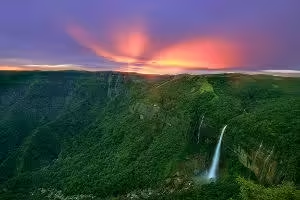
Discovering Mawsynram: The World’s Wettest Place
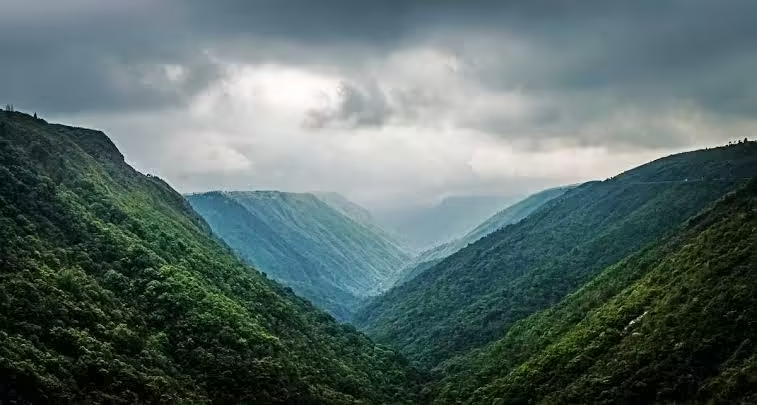
Nestled in the northeastern part of India lies Meghalaya, aptly named the “Abode of Clouds.” True to its name, clouds constantly blanket this region, creating a unique and mystical atmosphere.
Among its many marvels, Meghalaya is home to Mawsynram, the wettest place on Earth. Known for its record-breaking rainfall, this village offers a glimpse into a lifestyle shaped by relentless precipitation and unparalleled natural beauty.
The Unyielding Rain of Mawsynram
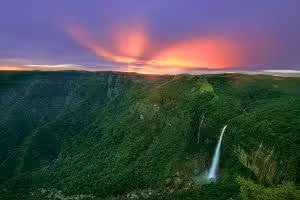
Mawsynram holds the Guinness World Record for the highest annual rainfall, averaging an astonishing 11,400 mm, which equates to over 37 feet of rain every year. In 2022, this village shattered its own record, recording over 3 feet of rainfall in just 24 hours.
To put this into perspective, one day of rain in Mawsynram surpasses a year’s worth of rain in Delhi. This continuous deluge shapes the daily lives and the unique culture of its residents.
A Day in the World’s Wettest Place
Upon arriving in Mawsynram, the sheer force of nature is evident. Clouds move swiftly across the landscape, often obscuring the village and its surroundings.
The visibility can drop so quickly that stepping back a few meters makes everything disappear into the mist. Despite this, life thrives under these extreme conditions.
Walking through the streets of Mawsynram reveals a community largely composed of the Khasi people, named after the Khasi Hills. The Khasi culture and language are distinct, setting this region apart from the rest of India.
Engaging with the locals, even with limited Hindi or English, often results in a warm smile and a friendly “hello,” showcasing the hospitality and resilience of the Khasi people.
The Ingenious Bamboo Umbrella: Kunoop
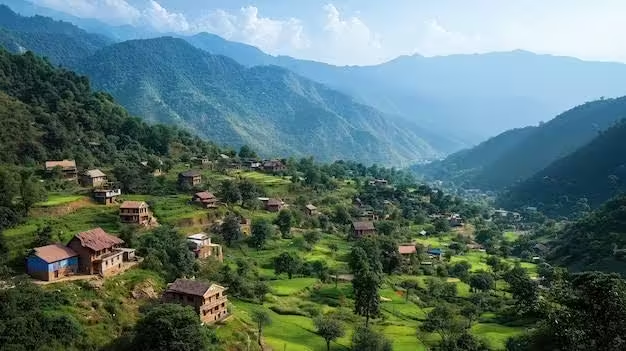
The relentless rain in Mawsynram has led to some fascinating innovations. One notable invention is the bamboo umbrella, known locally as “Kunoop.” Unlike traditional umbrellas, the Kunoop is hands-free, allowing individuals to work without interruption.
Made from bamboo and often reinforced with plastic to withstand hailstorms, this umbrella is a testament to the adaptability and ingenuity of the local population.
The Khasi Way of Life
Visiting a traditional Khasi home provides insight into the daily life and customs of this community. Wood-fired stoves are common, with food cooked over an open flame for a distinct flavor. The practice of keeping cats is widespread, primarily to control the rat population.
Conversations with locals often reveal a blend of cultures, as many families have roots in other parts of India.
The Khasi people have a deep connection with their environment. The continuous rainfall doesn’t halt their activities; instead, it has been seamlessly integrated into their way of life.
The children attend schools equipped to handle the wet weather, and during the rainy season, school assemblies are held indoors.
The Monsoon’s Gift
Mawsynram’s extraordinary rainfall is a result of its geographical location. During the monsoon season, moist air from the Bay of Bengal travels over the Khasi Hills, causing the air to condense and release vast amounts of rain. This phenomenon accounts for 70% of the village’s annual rainfall during the monsoon months.
The lush green landscapes, rapidly moving clouds, and stunning views are nature’s gift to this unique village.
A Hidden Gem
Despite its global recognition for rainfall, Mawsynram remains relatively unknown as a tourist destination. Few visitors venture to this remote village, but those who do are rewarded with breathtaking views and a deep sense of connection to nature.
The ever-changing scenery, from fast-moving clouds to clear skies, provides a constantly shifting canvas of beauty.
Exploring the Culture and Heritage
The culture of Mawsynram is as rich and varied as its weather. The Khasi people, one of the three major ethnic groups of Meghalaya, have a matrilineal society where lineage and inheritance are traced through the mother.
This unique societal structure contributes to the empowerment of women and a strong sense of community.
The Khasi language, rich in oral tradition, is an integral part of the local heritage. Folktales, myths, and legends are passed down through generations, keeping the culture alive and vibrant.
Traditional Khasi attire, such as the “Jainsem” for women and the “Jymphong” for men, is often seen during cultural festivities and day-to-day life.
The Unseen Beauty of Mawsynram
The natural beauty of Mawsynram extends beyond its rainfall records. The region is dotted with numerous waterfalls, caves, and lush green valleys. One of the most breathtaking sights is the Mawjymbuin Cave, a natural wonder with a massive stalagmite shaped like a Shivalinga, attracting both tourists and devotees.
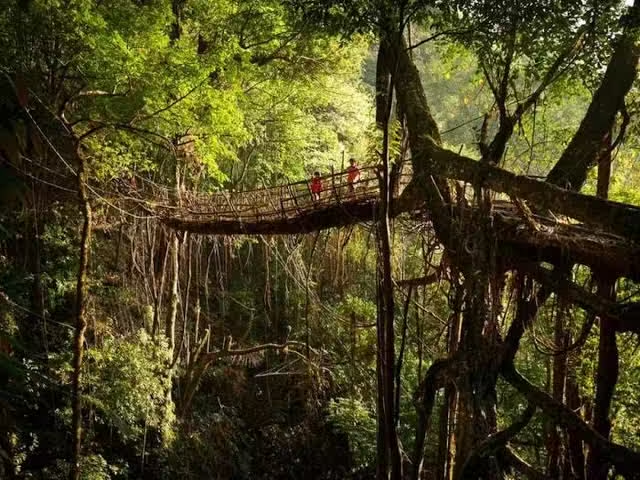
The Living Root Bridges, another marvel of Khasi ingenuity, are found in the nearby regions. These bridges, made from the roots of rubber trees, are a sustainable and living piece of architecture that grow stronger with time.
They stand as a testament to the harmonious relationship between the Khasi people and their environment.
The Resilience of the People
Living in the world’s wettest place requires resilience and adaptability. The people of Mawsynram have mastered the art of coexisting with nature’s fury.
The local economy is primarily agrarian, with rice, potatoes, and maize being the main crops. The heavy rains, while challenging, ensure fertile soil and abundant harvests.
The community spirit in Mawsynram is strong. Festivals and communal activities are central to village life.
The most prominent festival is “Shad Suk Mynsiem,” a springtime celebration of thanksgiving, where people gather in traditional attire, dance, and celebrate the bounties of nature.
The Unique Flora and Fauna
Mawsynram’s unique climate has fostered a diverse range of flora and fauna. The region’s dense forests are home to a variety of plants and animals not found elsewhere in India.
Rare orchids, ferns, and mosses thrive in the humid environment. Bird watchers can spot a multitude of species, including the rare and beautiful Blyth’s Tragopan and the elusive Hoolock Gibbon.
The village’s biodiversity is a critical component of its natural heritage, and efforts are being made to protect these ecosystems from the impacts of climate change and human activity.
Conservation initiatives focus on sustainable practices that balance the needs of the local population with environmental preservation.
The Local Economy and Traditional Crafts
Beyond agriculture, the people of Mawsynram engage in various traditional crafts that reflect their cultural heritage. Bamboo and cane products, hand-woven textiles, and intricate beadwork are some of the crafts that provide a livelihood for many families. These crafts are not only a source of income but also a means of preserving traditional skills and artistry.
Local markets in Mawsynram offer a glimpse into these crafts, where visitors can purchase authentic Khasi products. Supporting these markets contributes to the local economy and helps sustain the cultural heritage of the region.
Challenges and Opportunities
Despite its natural beauty and cultural richness, Mawsynram faces several challenges. The constant rainfall can lead to infrastructure issues, such as road erosion and landslides, making travel and connectivity difficult.
Limited access to modern amenities and healthcare services also poses challenges for the villagers.
However, these challenges present opportunities for sustainable tourism and development. Promoting eco-tourism can provide economic benefits while preserving the natural and cultural heritage of Mawsynram.
Initiatives to improve infrastructure, healthcare, and education can enhance the quality of life for the residents without compromising the environment.
Mawsynram, with its record-breaking rainfall and serene landscapes, offers an unparalleled experience. The resilience and warmth of its people, coupled with the region’s natural splendour, create a unique and unforgettable journey.
Visiting Mawsynram is not just about witnessing the world’s wettest place; it’s about embracing a different way of life, one that thrives amid the clouds and rain.
For those seeking an off-the-beaten-path adventure, Mawsynram is a hidden gem waiting to be discovered.
Its beauty, culture, and the indomitable spirit of its people offer a profound connection to nature and a reminder of the extraordinary resilience of humanity.




Pingback: Physical Development in Early Childhood - THE KNOWLEDGE LOOM