
Physical Development in Early Childhood

Early childhood is a crucial period for physical development and cognitive growth. This stage, typically defined as ages 2 to 6, sees significant changes in both the body and the brain.
The rapid growth and development during infancy and toddlerhood begin to slow, and children start to exhibit more refined motor skills, balance, and coordination.
Skeletal Growth

Body Growth and Changes
During early childhood, children become thinner as they lose baby fat, and their posture and balance improve, facilitating the development of motor skills. Individual differences in body size become more apparent due to genetic and environmental factors.
For instance, some children may inherit a predisposition for taller stature, while others may have a shorter build. Additionally, cultural factors, such as dietary habits and physical activity levels, can influence overall growth patterns.
Development of Epiphyses
Between the ages of 2 and 6, approximately 45 new epiphyses, or growth centers where cartilage hardens into bone, emerge in various parts of the skeleton. These growth centers are crucial for the hardening of the child’s skull, which remains flexible at birth to facilitate passage through the birth canal.
By the end of the preschool years, children start to lose their primary, or baby, teeth, with a significant number experiencing tooth decay due to poor diet and inadequate access to dental care.
This highlights the importance of not only monitoring physical development but also ensuring dental health through regular check-ups and proper oral hygiene.
Brain Development
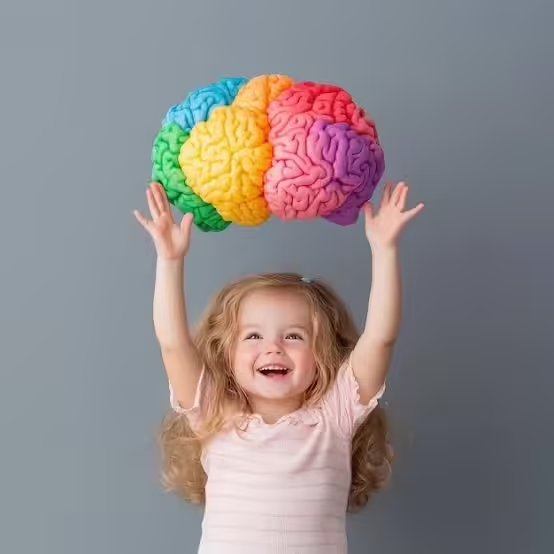
Brain Growth
Between the ages of 2 and 6, the brain increases from 70% to 90% of its adult weight. This period is marked by improvements in physical coordination, perception, attention, memory, language, logical thinking, and imagination.
By age 4, many parts of the cerebral cortex have overproduced synapses, particularly in the prefrontal cortex, where synapse density nearly doubles the adult value. This growth is essential for developing higher-order cognitive functions such as problem-solving and planning.
Synaptic Pruning
Synaptic pruning occurs as neurons that are seldom stimulated lose their connective fibers, leading to a decline in the number of synapses. This process helps refine brain function and efficiency.
The brain’s hemispheres continue to lateralize, with the left hemisphere, typically housing language skills, being especially active between ages 3 and 6, while the right hemisphere, associated with spatial skills, sees steady activity increase throughout early and middle childhood.
The interplay between both hemispheres is vital for a child’s overall cognitive abilities, allowing for a balanced development of language and spatial reasoning.
Handedness
Determining Dominant Hand
Handedness, the preference for using one hand over the other, reflects the greater capacity of one hemisphere of the brain to carry out skilled motor actions. In right-handed individuals, language is usually housed in the left hemisphere.
In contrast, left-handed individuals often share language functions between hemispheres, resulting in less pronounced lateralisation. Understanding handedness is essential for tailoring activities that enhance physical development, particularly in fine motor skills.
Influencing Factors
Cultural variations can affect the prevalence of left-handedness. Factors such as the child’s position in the uterus and practice using both hands can influence handedness.
Left-handed and mixed-handed individuals may exhibit advantages in thinking speed and flexibility, suggesting that diversity in handedness can contribute to varied approaches to learning and problem-solving.
Brain Structures and Functions
Cerebellum
The cerebellum, involved in balance and motor control, continues to develop as fibers linking it to the cerebral cortex grow and become myelinated.
Myelination, the process of forming a fatty sheath around neurons to improve signal transmission, contributes to advancements in motor skills and cognitive functions.
This is crucial for children as they engage in increasingly complex physical activities that require coordination and balance.
Reticular Formation and Hippocampus
The reticular formation, which regulates alertness and consciousness, generates synapses and myelinates throughout childhood and adolescence.
The hippocampus, essential for memory and spatial navigation, undergoes rapid synapse formation during early childhood, aiding in the development of spatial memories.
These developments are critical as children learn to navigate their environments, which is fundamental to their physical development.
Corpus Callosum
The corpus callosum, a bundle of myelinated fibers connecting the left and right hemispheres of the brain, experiences significant synapse formation between ages 3 and 6, facilitating improved coordination between hemispheres.
This enhanced connectivity is vital for integrating sensory information and motor coordination, further supporting children’s growing abilities to engage in various physical activities.
Influences on Physical Growth and Health
Heredity and Hormones
Genes influence physical development by regulating hormone production. The pituitary gland releases growth hormone, essential for the development of body tissues, and thyroid-stimulating hormone, which prompts the thyroid gland to release thyroxine, necessary for brain development and overall body growth.
Understanding the genetic factors at play can help parents and caregivers set realistic expectations for growth patterns.
Nutrition

As growth slows during early childhood, children’s appetites decline, and they develop a wariness of new foods. However, a high-quality diet remains crucial. Nutritional needs during this stage include adequate protein, vitamins, and minerals to support ongoing physical development.
Children often imitate the food choices of admired adults, emphasising the role of parental influence on dietary habits. Engaging children in meal preparation can also promote positive attitudes toward healthy eating.
Infectious Diseases and Immunization
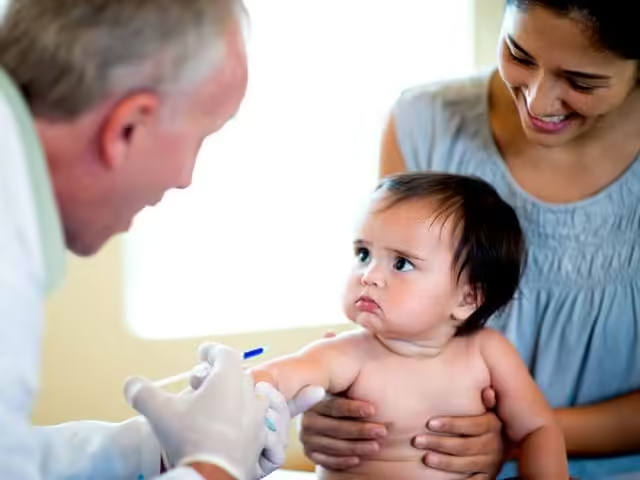
Poor diet weakens the immune system, increasing susceptibility to disease, which in turn can hinder physical and cognitive development. Immunization has significantly reduced childhood diseases in industrialized nations, yet many children, especially those in poverty, remain under-immunized.
Public awareness campaigns and improving access to healthcare are vital in addressing this issue.
Ensuring that children are up-to-date on vaccinations is essential for protecting their health and supporting their overall physical development.
Childhood Injuries
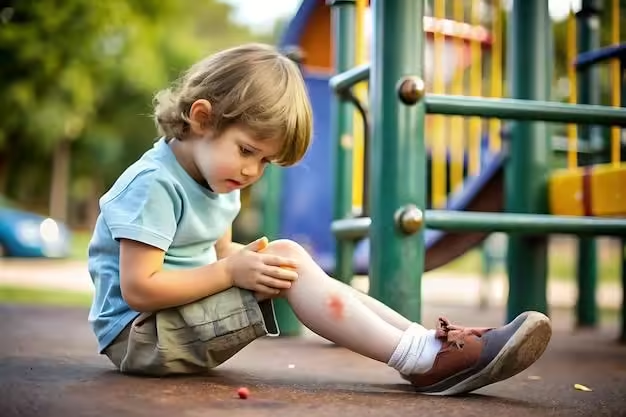
Unintentional injuries are the leading cause of childhood death in industrialized nations, with factors such as poverty, single parenthood, and low parental education levels contributing to higher injury rates.
Preventive measures include public awareness campaigns, improving family conditions, and reducing home hazards. Education on safety practices can significantly reduce risks, allowing children to explore their environments while minimising danger.
Motor Development
Gross Motor Skills
As children lose baby fat and their bodies become more streamlined, their balance improves, leading to smoother, more rhythmic movements. By age 2, children’s gait becomes steadier, enabling activities like running, jumping, and skipping.
Improved stability allows them to develop new skills such as throwing and catching balls and steering tricycles. Encouraging outdoor play and physical activities can further enhance gross motor skills during this critical period.
Fine Motor Skills
Children become more self-sufficient during early childhood, learning to dress and feed themselves. By age 6, many can tie their shoes, a complex task requiring fine motor coordination.
Drawing skills also progress, starting with scribbles and evolving into more realistic representations by ages 5 and 6. Activities like arts and crafts, puzzles, and building blocks can promote fine motor development and hand-eye coordination.
Individual Differences in Motor Skills
Factors such as body build, gender, and encouragement of physical play influence motor skill development. Boys generally excel in skills requiring force and power, while girls often have an edge in fine motor skills and tasks requiring balance and agility.
Social pressures and opportunities for practice also play significant roles in developing motor skills. Providing varied opportunities for physical activities can help children discover their strengths and preferences, fostering a love for movement.
Physical development in early childhood is marked by significant growth and changes in both the body and the brain. Understanding these developmental milestones and the factors influencing them is crucial for fostering healthy growth and development in young children.
Through proper nutrition, healthcare, and opportunities for physical activity, parents and caregivers can support the optimal physical development of children during these formative years.
By creating a supportive environment that encourages exploration and movement, we can help children build a strong foundation for lifelong health and well-being.




Follow us for more
https://www.amazon.in/kids-fashion/b?ie=UTF8&node=9361420031
Pingback: Modern Living Room Interior Design - THE KNOWLEDGE LOOM