
Developing Proficient Speaking Skills in Children

To ensure your child grows up proficient in speaking skills, it is essential to improve their pronunciation and expand their vocabulary from a young age. While we often focus on what children eat or drink for their development, language skills can sometimes be overlooked.
Just as we teach them to walk, we should also teach them to speak effectively to boost their confidence and communication abilities. Here are some measures to help your child become proficient in speaking skills, with a focus on vocabulary building.
Talk to the Child as Much as Possible

To encourage children to participate in conversations, take the initiative and talk to them frequently. Involve them in everyday activities by making each small task a part of the conversation. For example, when feeding your child, explain what they are eating and ask questions about the taste.
This type of interaction increases their vocabulary and helps them learn new words, which are essential for effective communication. Additionally, teach them the skill of sitting and discussing a topic.
Ask Questions and Encourage Answers

Children’s curiosity accelerates their learning process. Encourage them to ask and answer questions to improve their communication skills. For example, after playing with your child, ask, “Did you learn anything new today?” or “What do you want to eat today?” If they struggle to answer, offer assistance. This helps them learn how to express their thoughts by putting them into words.
Read Books to Them and Tell Stories
Stories and books play a crucial role in a child’s language development. Read a story to your child every day before bedtime or introduce them to picture books.
For instance, use a story related to a picture of a ‘child and bear’ and describe the scenes. This helps the child learn to identify words by looking at pictures and gives words to emotions through storytelling. Sometimes, ask the child to create and tell their own stories.
Give Positive Feedback
As children reach around three years old, they start learning to speak properly. Be patient and gradually improve their speech skills. Encourage them when they try to learn or speak something new, and ensure the conversation is not burdensome. If the child mispronounces a word or takes time to form a complete sentence, gently correct and encourage them to speak correctly.
Positive feedback motivates the child to speak accurately without pressure. Ensure that adult members of the household also use correct language and pronunciation, as children learn by imitation. Keep your tone slow and voice normal.
Tell the Difference Between Right and Wrong
Children often give different names to things, but it’s important to correct them gently. For example, if the child calls water ‘Mum,’ explain that it is actually called water. Consistently using the correct names for things helps them learn the proper vocabulary.
Encourage Social Interaction
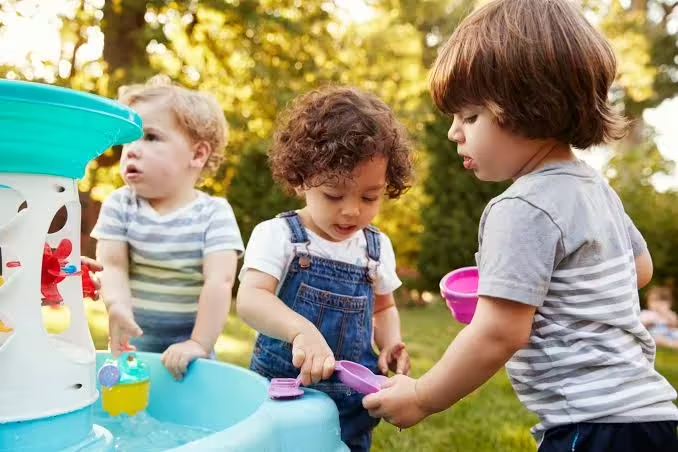
Arrange playdates or group activities where your child can interact with peers. Social interactions allow them to practice and improve their communication skills naturally and enjoyably. This exposure helps them learn new words, understand different speech patterns, and develop the ability to hold conversations.
Play Word Games and Activities
Incorporate fun word games and activities into your daily routine to boost your child’s vocabulary and pronunciation. Games like “I Spy,” word matching, or storytelling with picture cards make learning new words enjoyable. These activities also enhance their cognitive abilities and creativity.
Use Technology Wisely
Leverage educational apps and programs designed to improve children’s language skills. Choose age-appropriate, interactive apps that focus on vocabulary building, pronunciation, and storytelling. Balance screen time with real-world interactions to ensure well-rounded development.
Model Good Speaking Habits
Children learn by observing and imitating adults. Model good speaking habits by speaking clearly and using a rich vocabulary. Avoid baby talk and gently correct any mispronunciations. Demonstrate active listening by giving your child full attention when they speak, showing them that their words are valued.
Encourage Singing and Rhyming

Singing songs and reciting rhymes can enhance your child’s speaking skills. Music and rhymes help children learn new words, understand rhythm, and improve memory. Encourage your child to sing along and practice rhyming games to make learning to speak a delightful experience.
Be Patient and Supportive
Learning to speak proficiently is a gradual process, and each child develops at their own pace. Be patient and supportive, offering praise and encouragement for their efforts. Avoid expressing frustration if progress seems slow. A positive and nurturing environment is key to building confidence and motivation in your child.
Seek Professional Help if Needed
If your child is significantly behind in speech development or struggles with specific speech issues, consider seeking help from a speech therapist or pediatrician. Early intervention can address underlying problems and provide the necessary tools to improve their speaking skills effectively.
Introduce a Rich Language Environment

Creating a language-rich environment at home is essential for developing your child’s speaking skills. Surround your child with a variety of words through conversations, books, and educational media. Use descriptive language when talking about daily activities to expose them to new vocabulary. For example, describe the texture, colour, and taste of foods during meals, or discuss the shapes and sizes of objects around the house.
Encourage Descriptive Language
Encourage your child to use descriptive language by asking open-ended questions that require more than yes or no answers. Questions like “What did you see at the park today?” or “How did the story make you feel?” prompt your child to think about their experiences and articulate them clearly. This practice helps them build a richer vocabulary and improve their ability to express complex ideas.
Promote Role-Playing and Pretend Play
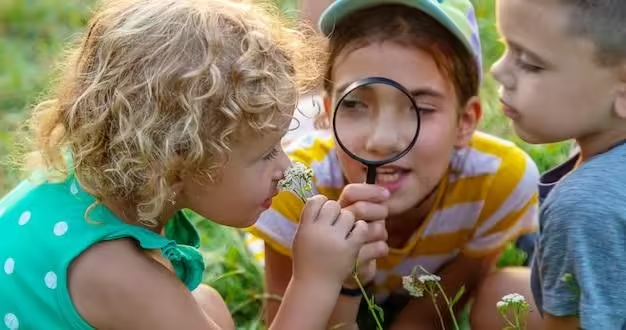
Role-playing and pretend play are excellent ways to develop speaking skills. Provide your child with props and costumes to encourage imaginative play. Acting out different scenarios helps children practice new vocabulary and experiment with sentence structures. Whether they’re playing ‘teacher,’ ‘doctor,’ or ‘shopkeeper,’ these activities provide valuable opportunities for language development.
Use Visual Aids
Visual aids, such as flashcards, posters, and charts, can support your child’s language learning. Use these tools to teach new words and concepts. For instance, create a word wall in your home with pictures and labels of common household items, animals, and foods. Regularly review these words with your child to reinforce their learning.
Encourage Peer Learning

Encouraging peer learning can be very effective. Organize playgroups or learning sessions where children can interact and learn from each other. Peer interactions often involve more spontaneous and natural conversations, helping children practice their speaking skills in a relaxed setting.
Make Use of Everyday Moments
Everyday moments can be turned into learning opportunities. Use daily routines, such as grocery shopping, cooking, or cleaning, to teach new words and phrases. For example, while cooking, you can talk about the ingredients, their origins, and the cooking process. This not only enriches your child’s vocabulary but also makes learning a fun and integral part of their daily life.
Monitor Progress and Adjust Strategies
Regularly monitor your child’s progress in speaking skills and adjust your strategies as needed. Keep track of the new words they learn, their ability to form sentences, and their confidence in speaking. Celebrate their achievements and provide additional support in areas where they may be struggling.
Foster a Love for Reading and Writing

Reading and writing are closely linked to speaking skills. Encourage your child to engage in activities that involve both reading and writing. Provide them with age-appropriate books, encourage them to write short stories or journals, and discuss their writings. These activities reinforce their language skills and help them understand the structure and flow of language.
By adopting these measures, you can help your child develop proficient speaking skills that will benefit them throughout their life.
Effective communication enhances social interactions, academic performance, and overall confidence. Start early, be consistent, and create a supportive environment to nurture your child’s language development.
Implementing these strategies will not only help your child become a confident speaker but also foster a lifelong love for learning and communication.
Embrace the journey with patience and positivity, and watch your child flourish in their speaking abilities. Remember, the foundation you lay today will have lasting benefits for your child’s future.




Pingback: Delicious Vegan Recipes forEvery Occasion-THE KNOWLEDGE LOOM