Char Dham Yatra: A Journey Where Heaven Meets Earth
A Pilgrimage of the Spirit, Not Just the Feet
There are places where the air feels lighter, the winds whisper stories, and the silence speaks louder than words. The Char Dham Yatra is one such journey. It’s not just a physical trek through four Himalayan temples it is a sacred passage through faith, forgiveness, and freedom of the soul.
Every year, thousands undertake this pilgrimage in the Indian state of Uttarakhand, believing that walking these holy paths washes away sins, opens the heart, and brings moksha liberation from the cycle of birth and death.
These four dhams—Yamunotri, Gangotri, Kedarnath, and Badrinath are not just shrines but gateways to ancient myths and divine presence that continue to shape India’s spiritual identity.
Yamunotri – The Divine Sister and the River of Compassion
The Land Where the Yamuna Springs Forth
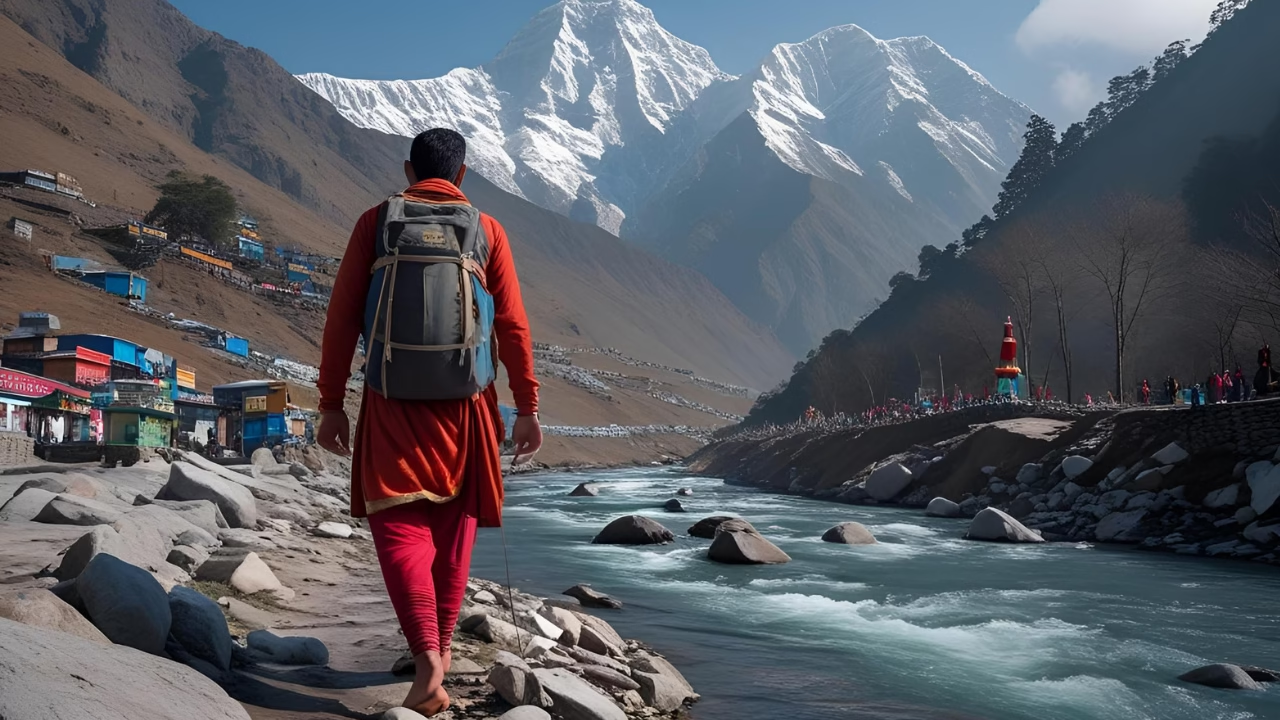
Tucked away in the western Garhwal Himalayas, Yamunotri sits at an altitude of 3,293 meters. Reaching the shrine requires a 6 km trek from Janki Chatti, often completed with the help of ponies or palanquins. But every step is spiritually uplifting.
A Sister’s Gift: The Tale of Yamunotri
Yamunotri is the source of the Yamuna River, personified as Goddess Yamuna, the sister of Yamraj, the god of death. According to legend, she promised to spare the devotees who bathe in her waters from untimely or painful death a divine blessing from a loving sister.
It is said that sage Asit Muni once lived here and bathed daily in both Yamuna and Ganga. When old age prevented him from reaching the Ganga, the river itself appeared beside Yamuna to honor his devotion.
The Surya Kund, a thermal spring near the temple, is used to cook rice and potatoes as prasad, carrying a divine warmth that touches both body and soul.
Gangotri – Where the Celestial Ganga Touched Earth
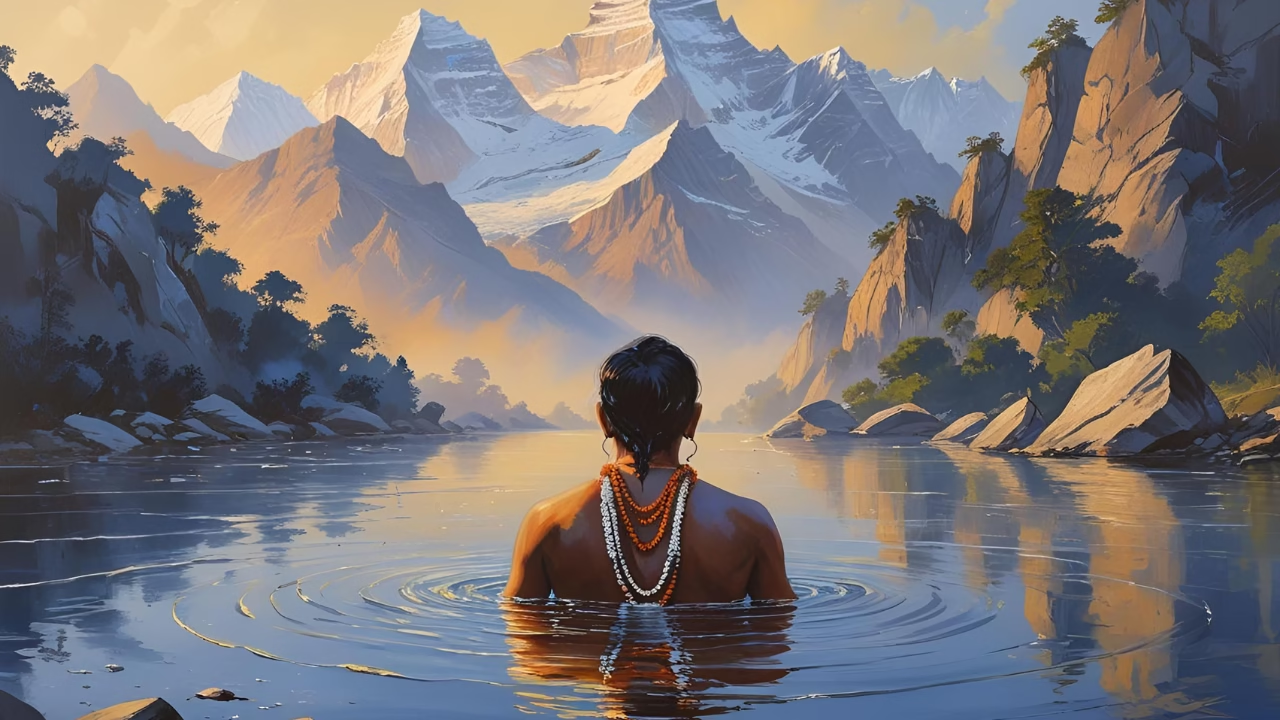
Goddess Ganga’s Descent and the Boon of Bhagirath
Located at 3,100 meters, Gangotri is the origin of the Ganga River in its early form as Bhagirathi, flowing from the Gaumukh glacier, shaped like a cow’s mouth.
The Legend That Echoes in Every Drop
The story of Gangotri is one of ultimate devotion. King Bhagirath, determined to free the souls of his ancestors, meditated for centuries to bring Ganga from the heavens. Pleased with his penance, she agreed but her powerful descent threatened to destroy Earth.
To prevent this, Lord Shiva caught Ganga in his matted locks and released her gently in streams. The place where she first descended is Gangotri, where a simple yet powerful temple stands, radiating peace and purpose.
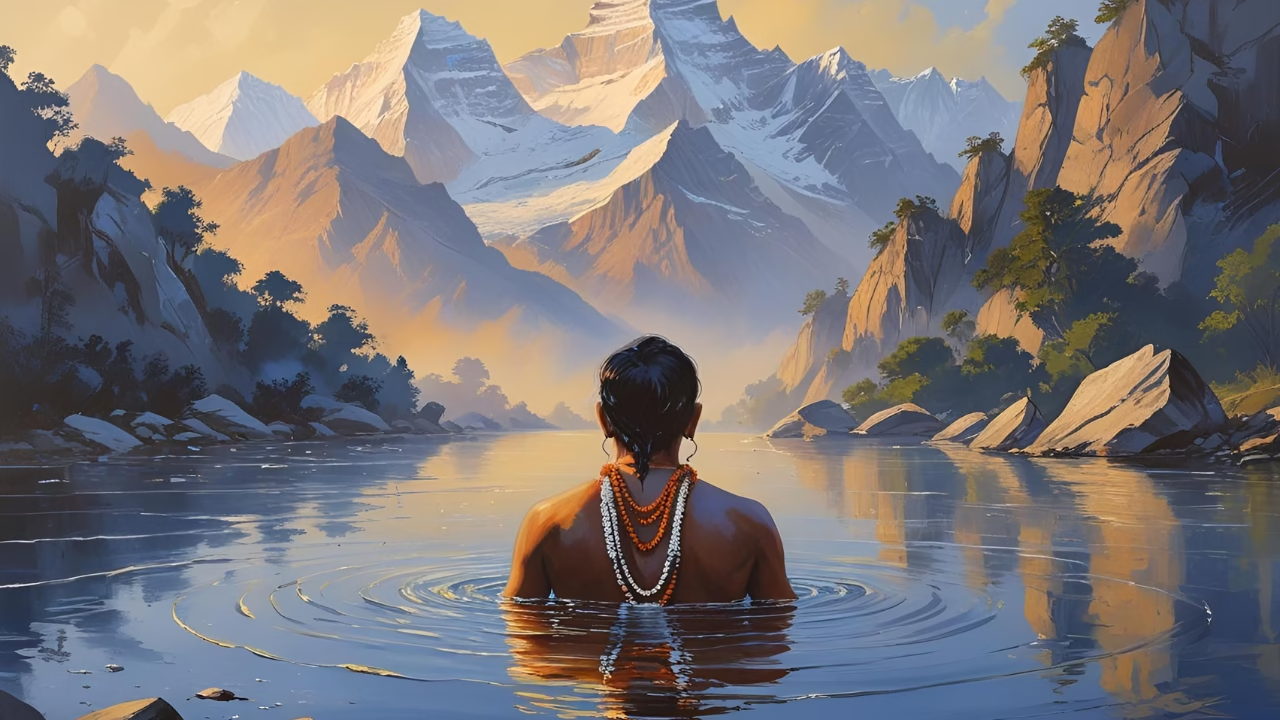
Even today, many begin their day at Gangotri with prayers and a dip in the icy waters believed to cleanse not just the body, but generations of karmic weight.
Kedarnath – The Silent Strength of Lord Shiva
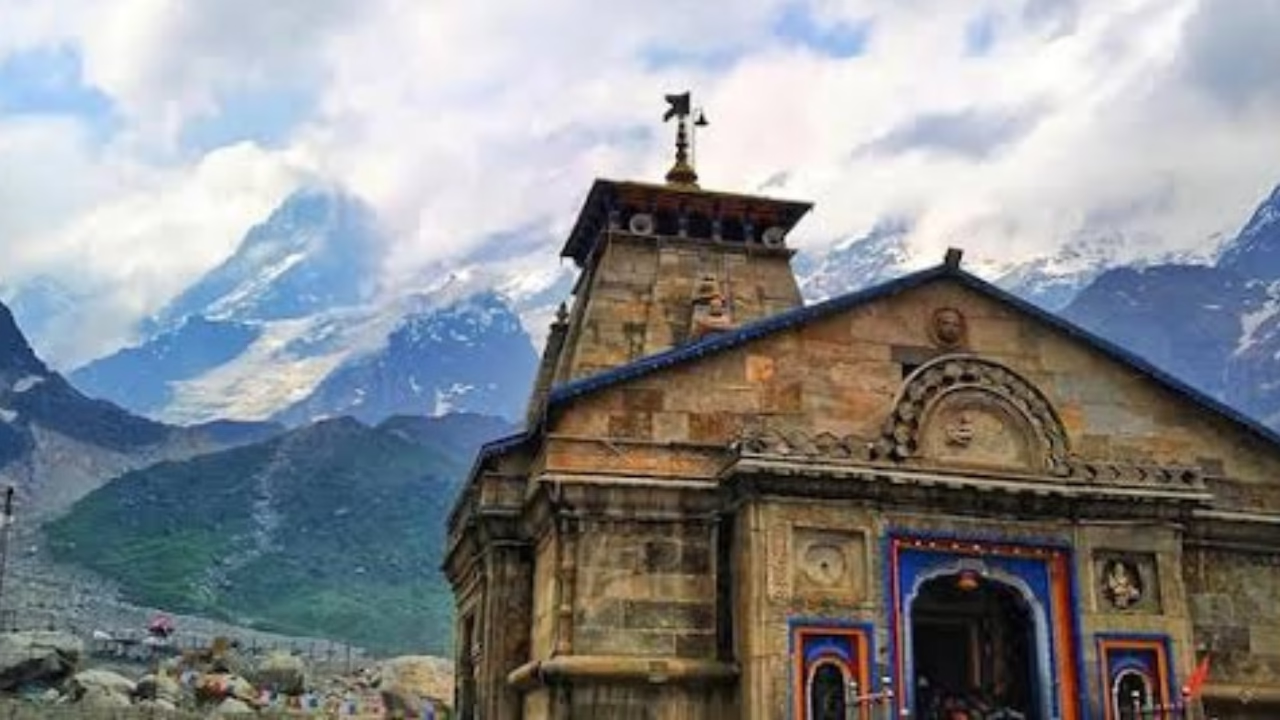
Among the Peaks, Where Faith Walks with Snow
High above, at 3,583 meters, surrounded by rugged cliffs and glaciers, lies Kedarnath, one of the twelve Jyotirlingas and among the most spiritually charged places on Earth. Getting there requires an arduous 18 km trek (or helicopter service), but the devotion in each pilgrim’s heart fuels the climb.
A Legend Etched in Stone
After the war of Mahabharata, the Pandavas sought forgiveness from Shiva for their sins. Shiva, however, wished to avoid them and disguised himself as a bull. But when they found him, he dived underground. His hump remained visible in Kedarnath, while other parts emerged in nearby locations forming the Panch Kedar shrines.
Despite being almost completely destroyed during the devastating 2013 floods, the temple stood tall, untouched a miracle many believe was Lord Shiva’s own protection.
Standing before the ancient, dark-stone structure, surrounded by snow-capped peaks, you feel humbled not by fear, but by the immense compassion of a god who watches in silence.
Badrinath – The Blessing of Lord Vishnu
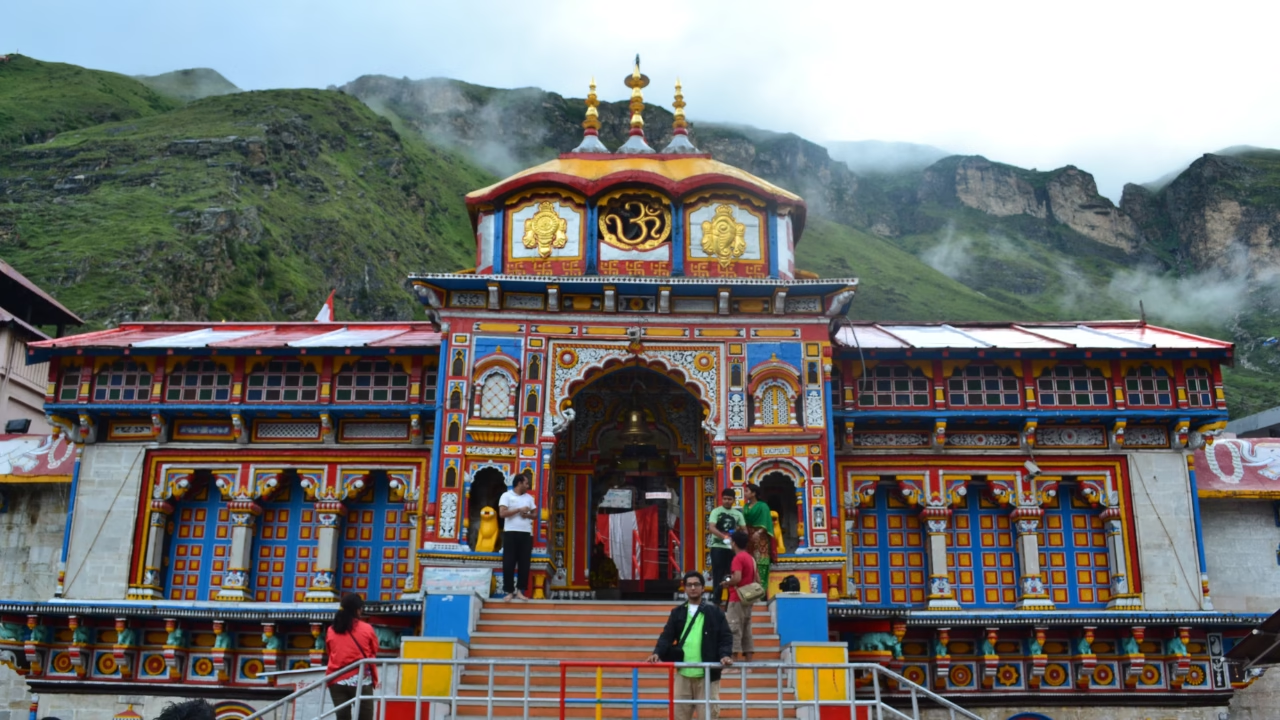
The Soul’s Final Resting Place
The final stop of the Char Dham Yatra, Badrinath, lies at 3,133 meters in the Alaknanda Valley. Among brightly painted houses and mist-covered hills stands a golden-roofed temple dedicated to Lord Vishnu.
The temple opens only six months a year due to heavy snowfall, yet during those few months, millions arrive with folded hands and eyes filled with tears.
The Tale of Meditation and Love
Legend has it that Lord Vishnu, in his Narayan form, meditated here for ages. His consort Lakshmi, seeing him exposed to the harsh climate, transformed herself into a Badri (wild berry) tree to shield him. Moved by her devotion, Vishnu declared this place as Badrikashram and promised to reside here eternally.
Adi Shankaracharya, the great philosopher-saint, rediscovered this temple and revived it as a major pilgrimage site. Today, the chants of “Om Namo Narayanaya” resonate in every corner, bringing solace to tired feet and hungry hearts.
Char Dham – A Spiritual Circuit of the Elements
Each Dham represents not just a deity, but an element of life:
Yamunotri – Water of purity and love
Gangotri – Flow of forgiveness and rebirth
Kedarnath – Earthly strength and silence
Badrinath – Fire of knowledge and liberation
Together, they form a spiritual cycle from birth to salvation, from karma to moksha.
Modern Realities, Eternal Faith
Despite modern amenities like ropeways, chopper services, and biometric registrations, the Char Dham remains deeply traditional. Pilgrims still walk barefoot, chant ancient mantras, and leave offerings at the shrines not out of habit, but from the heart.
It is a pilgrimage where even pain becomes prayer. Whether it’s the burn in your legs on the Kedarnath trek or the cold wind biting your face at Gangotri, every discomfort reminds you of your fragile human self, and every sight of the shrine reminds you of the divine that watches over.
Tips for the Pilgrim Heart
- Start with Yamunotri, then proceed to Gangotri, Kedarnath, and Badrinath (west to east).
- Prepare physically a light exercise routine before the yatra helps, especially for Kedarnath.
- Carry essential medicines, woolens, rain gear, and extra batteries for remote areas.
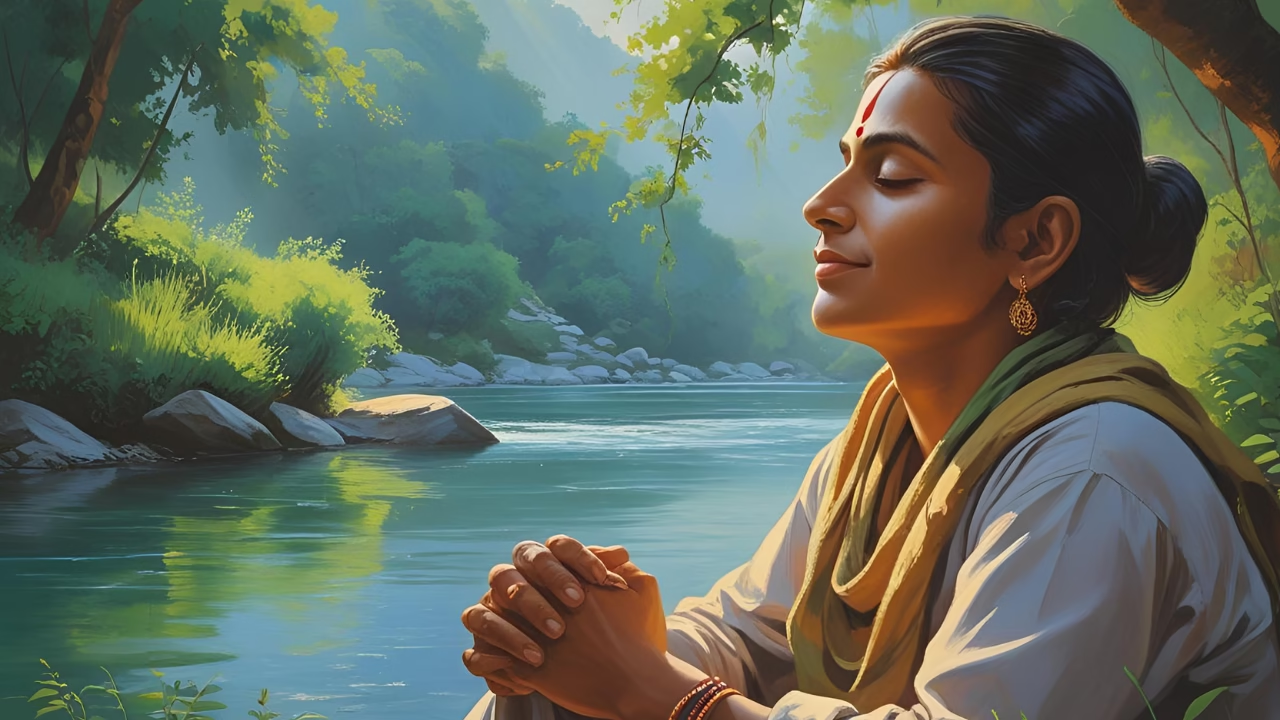
- Respect local customs and practice silence and reflection the mountains respond to stillness.
The Divine Doesn’t Just Reside in Temples It Walks With You
When you return from Char Dham, you may still look the same but something inside you shifts. Perhaps it’s the snow that clung to your shoes at Kedarnath, the ice-cold splash of Gangotri’s waters, or the sight of monks meditating silently at Badrinath.
More than a destination, Char Dham is a transformation.
As the rivers continue to flow and the peaks remain unmoved, so does the eternal message of this pilgrimage: “In surrender, there is strength. In silence, there is divinity. In every step, there is salvation.”