
Durga Puja: A Celebration of Divine Power and Cultural Heritage
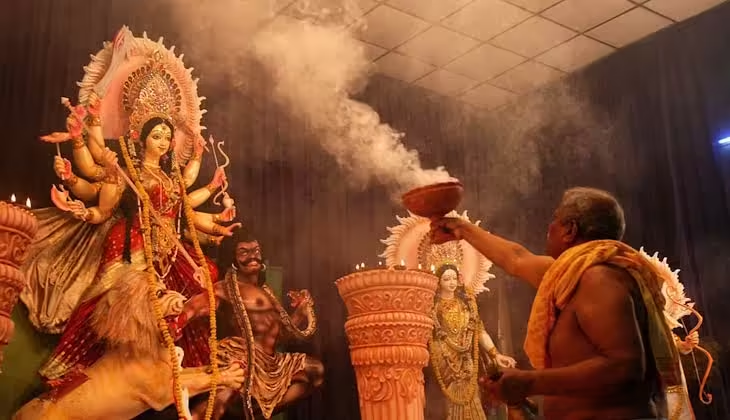
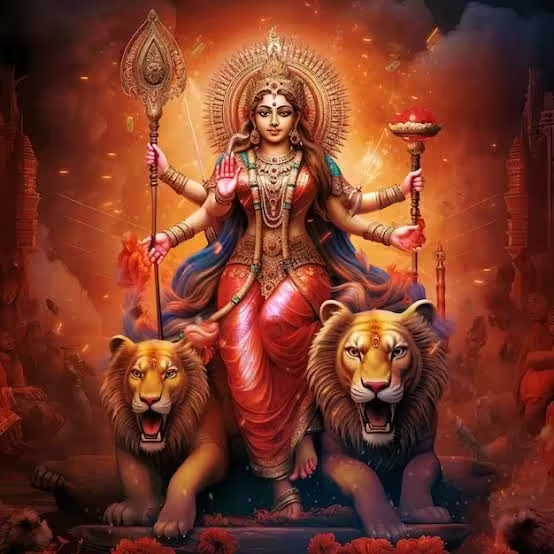
Durga Puja, one of the most significant festivals in India, celebrates the triumph of good over evil. Observed with grandeur and fervor, this festival honors Goddess Durga, who symbolizes strength, protection, and motherhood. The celebration spans ten days, with the last five days being particularly significant, filled with rituals, cultural events, and communal gatherings.
Historical and Mythological Significance
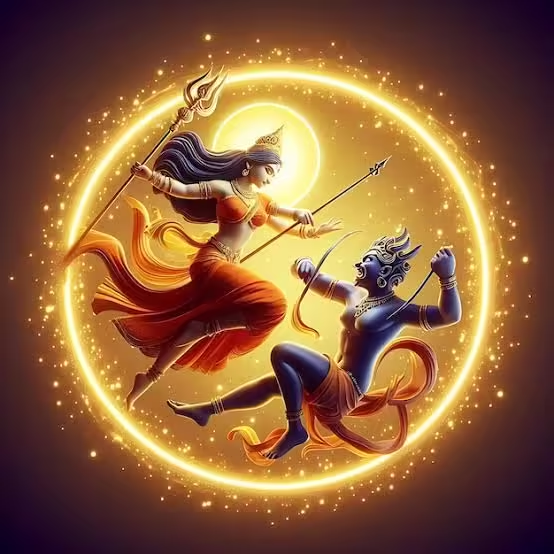
Durga Puja commemorates the victory of Goddess Durga over the buffalo demon Mahishasura, symbolizing the victory of good over evil. According to Hindu mythology, Mahishasura had terrorized the heavens and the earth, and the gods, unable to defeat him, created Durga from their collective energy. Armed with their divine weapons, Durga battled Mahishasura for nine days and nights and ultimately defeated him on the tenth day, known as Vijayadashami or Dussehra.
Rituals and Celebrations
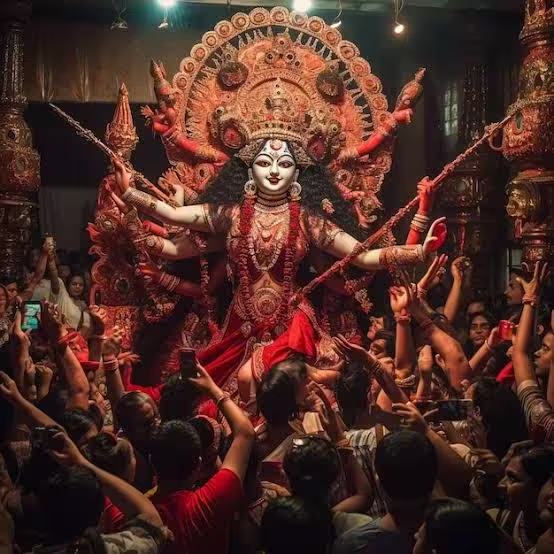
Durga Puja is marked by elaborate rituals and ceremonies. The festival begins with Mahalaya, which signifies the arrival of the goddess. Devotees wake up early to listen to the recitation of Chandipath, an invocation to Durga. This day is also associated with the symbolic construction of the goddess’s eyes.
The main celebrations start on the sixth day, Shashthi, when the goddess is believed to descend to earth. Elaborate ‘pandal’ structures are erected, housing beautifully crafted idols of Durga along with her children—Ganesha, Kartikeya, Lakshmi, and Saraswati. Each ‘pandal’ is uniquely decorated, often depicting various themes from mythology, social issues, or pure artistic creativity.
Key Regions Celebrating Durga Puja
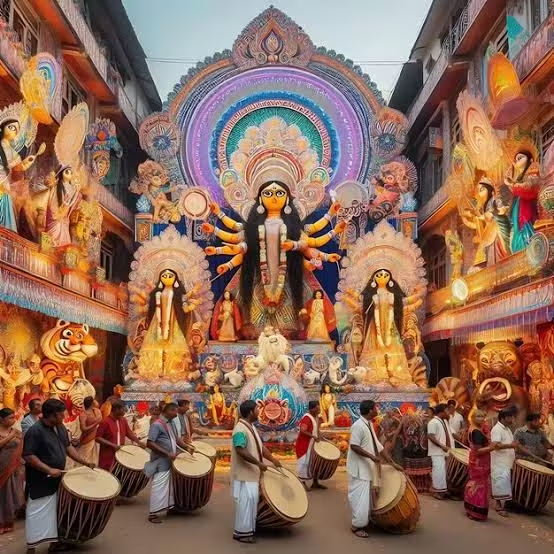
While Durga Puja is celebrated throughout India, some regions are renowned for their unique and grand celebrations. Here are the places where Durga Puja is celebrated with exceptional enthusiasm and devotion:
West Bengal
West Bengal, particularly Kolkata, is the epicenter of Durga Puja celebrations. The city transforms into a dazzling spectacle of lights, art, and devotion. Thousands of ‘pandal’ structures are erected across the city, each showcasing intricate themes and artistic excellence. The celebrations in Kolkata are marked by traditional dances, music, and dramatic performances. The city comes alive with community feasts, fairs, and cultural events, attracting visitors from all over the world.
Assam
In Assam, Durga Puja is celebrated with equal fervor. The state is known for its vibrant and elaborate ‘pandals.’ Guwahati, the largest city in Assam, witnesses grand celebrations with beautifully decorated ‘pandals’ and idols. The festival is a blend of traditional rituals and modern festivities, with cultural programs, music, and dance performances.
Odisha
In Odisha, particularly in Cuttack and Bhubaneswar, Durga Puja is celebrated with great enthusiasm. The unique feature of Odisha’s celebrations is the use of silver filigree work, known as ‘Chandi Medha,’ to adorn the ‘pandals’ and idols. The intricate silver decorations make the celebrations in Odisha distinct and visually captivating.
Bihar and Jharkhand
In Bihar and Jharkhand, Durga Puja is celebrated with traditional rituals and community gatherings. Patna, the capital of Bihar, hosts numerous ‘pandals’ with beautifully crafted idols and vibrant decorations. The festival is marked by devotional songs, dance performances, and community feasts.
Tripura
In Tripura, Durga Puja is one of the most significant festivals, celebrated with immense enthusiasm. Agartala, the capital city, sees grand celebrations with beautifully decorated ‘pandals,’ cultural events, and community gatherings. The festival is a time for socializing, feasting, and participating in various cultural activities.
Delhi
In the national capital, Delhi, Durga Puja is celebrated with great pomp and show, especially in areas like Chittaranjan Park, which has a large Bengali community. The ‘pandals’ in Delhi are known for their grandeur and artistic excellence. The festival here is marked by cultural programs, music, dance performances, and sumptuous feasts.
Mumbai
Mumbai, the city of dreams, also witnesses grand Durga Puja celebrations, particularly in areas like Shivaji Park and Lokhandwala. The festival in Mumbai is marked by beautiful ‘pandals,’ cultural events, and community gatherings. The city’s cosmopolitan nature adds a unique flavour to the celebrations, blending traditional rituals with contemporary festivities.
Bangalore
In Bangalore, the capital of Karnataka, Durga Puja is celebrated with great enthusiasm, especially by the Bengali community. The city hosts several ‘pandals’ with beautifully crafted idols and vibrant decorations. The festival is marked by cultural programs, traditional dances, and community feasts, attracting people from all walks of life.
Pune
Pune, known for its cultural heritage, also celebrates Durga Puja with grandeur. The Bengali community in Pune organizes elaborate ‘pandals’ and cultural events, showcasing traditional music, dance, and drama. The city’s celebrations are marked by devotion, art, and communal harmony.
Gastronomic Delights
Food plays a central role during Durga Puja. Streets are lined with stalls selling an array of delectable dishes. From traditional Bengali sweets like rasgulla and sandesh to savory delights like kachori and chaat, the festival is a treat for food lovers. Special ‘bhog’ or offerings, including khichuri, labra (a mix of vegetables), and payesh (rice pudding), are prepared and served to devotees.
Culinary Recipes for the Festive Season
As part of the Durga Puja festivities, here are two traditional recipes that are often prepared and enjoyed during this time: Sookhe Kale Chane and Sooji Halwa.
Sookhe Kale Chane Recipe
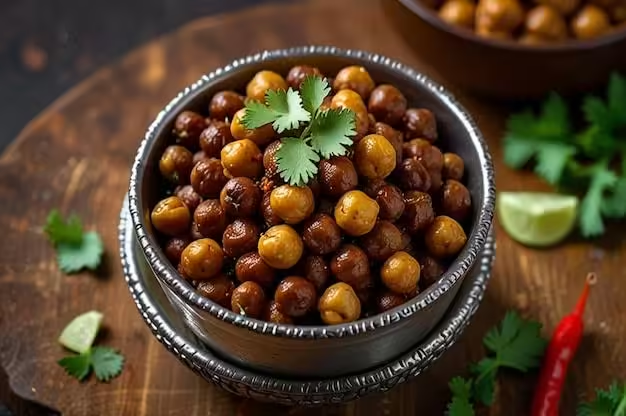
Ingredients:
• 1 cup black chickpeas (kale chane)
• 2 tbsp oil
• 1 tsp cumin seeds
• 1 tsp coriander powder
• 1 tsp red chili powder (adjust to taste)
• 1/2 tsp turmeric powder
• 1/2 tsp garam masala
• Salt to taste
• 1/2 cup water
Instructions:
1. Preparation:
• Soak 1 cup of black chickpeas overnight. If you can’t soak them overnight, soak them in lukewarm water for 5-6 hours.
• Remove water completely from soaked chickpeas.
2. Masala Preparation:
• Heat 2 tbsp oil in a pan.
• Add 1 tsp cumin seeds and let them crackle.
• Add 1 tsp coriander powder, 1 tsp red chili powder, 1/2 tsp turmeric powder, and salt to taste.
• Saute the spices for 1 minute until the oil separates.
3. Cooking Chickpeas:
• Add the soaked chickpeas to the pan and mix well.
• Add 1/2 cup of water. We don’t need much water.
• Cook on high flame until it comes to a boil, then reduce the flame to low.
• Cover and cook until one whistle.
• Reduce the flame to low and cook for an additional 10 minutes.
• Turn off the flame and let the pressure cooker cool down.
Sooji Halwa Recipe
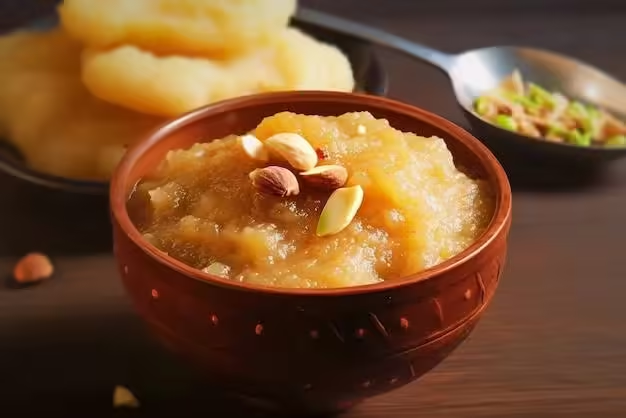
Ingredients:
• 1 cup semolina (sooji)
• 2 tbsp gram flour (besan)
• 1/2 cup ghee (clarified butter)
• 1 cup sugar
• 2 cups water
• A pinch of cardamom powder
• Chopped nuts (optional, for garnish)
Instructions:
1. Preparation:
• Heat 1/2 cup ghee in a pan on low-medium flame.
• Add 1 cup semolina and roast it for 2 minutes, stirring continuously.
• After roasting the semolina, add 2 tbsp gram flour. Gram flour roasts quickly and semolina takes time, so add gram flour after 2 minutes.
• Roast the mixture on low-medium flame, stirring continuously until it changes color to a light golden brown. Do not roast on high flame to avoid burning.
2. Cooking Halwa:
• Reduce the flame to low and add 2 cups of water to the roasted semolina and gram flour mixture. Stir continuously to avoid lumps.
• Turn up the flame to low-medium and cover the pan. Cook for 3 minutes.
• After 3 minutes, stir the halwa and cover again. Cook for another 3 minutes.
• After the second 3 minutes, uncover the pan and cook the halwa on low-medium flame, stirring occasionally until it thickens. If you feel there’s still water, turn on the flame and cook until the water dries up.
3. Final Touch:
• Add a pinch of cardamom powder and mix well.
• Garnish with chopped nuts if desired.
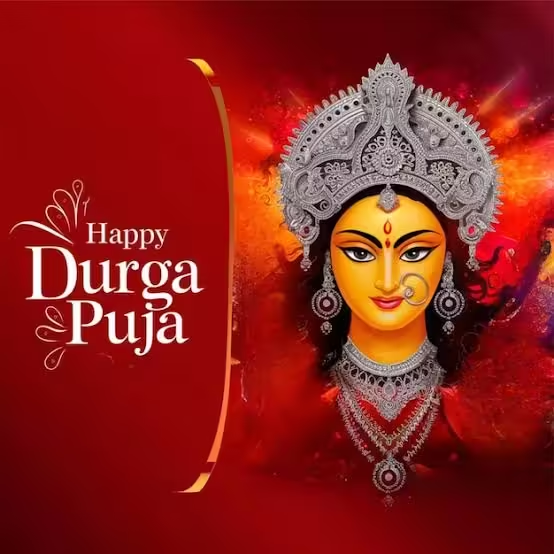
Durga Puja is a time to rejoice, reflect, and renew one’s spirit. It is a celebration of faith, art, and community. The festival’s enduring appeal lies in its ability to blend the sacred with the secular, the traditional with the contemporary, making it a truly unique and all-encompassing celebration.
As the rhythmic beats of the ‘dhaak’ resonate and the scent of incense fills the air, Durga Puja reminds us of the timeless battle between good and evil and the eternal hope for righteousness to prevail.




Pingback: Cervical Pain : Spondylosis Insights - THE KNOWLEDGE LOOM
You’ve crafted something truly timeless here — writing that will continue to resonate with readers for years to come.