
Welcome to our comprehensive guide on child development. Many parents often ask, “What is child development?” It’s a crucial question because understanding the stages and milestones of child development can help you support and nurture your child’s growth effectively.
In this guide, we will delve into what child development entails, the five key stages of development, and the skills children typically develop at different ages.
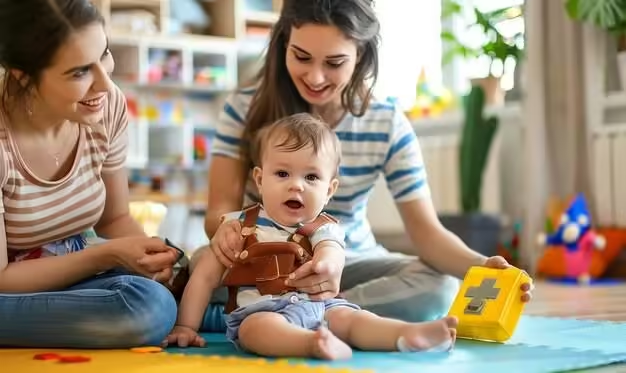
What is Child Development?
Child development is a process that every child goes through, involving learning and mastering skills like crawling, rolling, sitting, walking, talking, and even tying shoes. This process is broken down into developmental milestones, which occur during predictable time periods or age stages.
Child development typically focuses on five main areas: cognitive development, social and emotional development, speech and language development, fine motor skill development, and gross motor skill development.
The Five Stages of Child Development
1. Cognitive Development

Cognitive development refers to a child’s ability to learn and solve problems. Examples of cognitive development include a two-month-old baby exploring the environment with hands or eyes and a five-year-old child learning to listen and read letters.
2. Social and Emotional Development
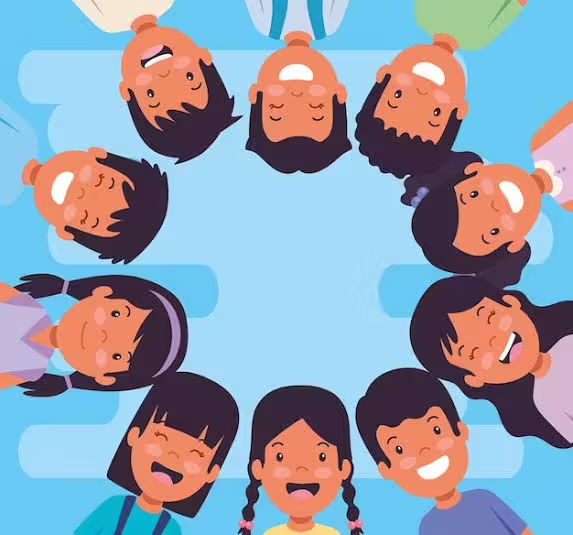
Social and emotional development involves a child’s ability to interact with others and learn self-control. Examples include a six-week-old baby smiling, a ten-month-old baby waving bye-bye, and a five-year-old child learning to take turns in games.
3. Speech and Language Development
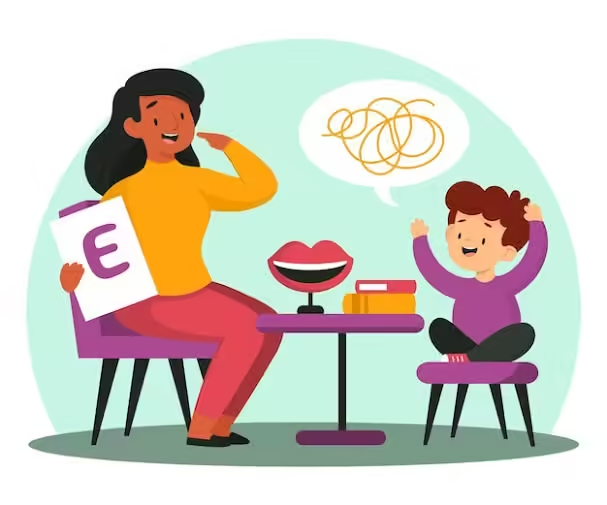
Speech and language development is when a child learns to understand and use language. This includes a 12-month-old baby saying their first words, a two-year-old naming body parts, and a five-year-old learning to say “feet” instead of “foots.”
4. Fine Motor Skill Development
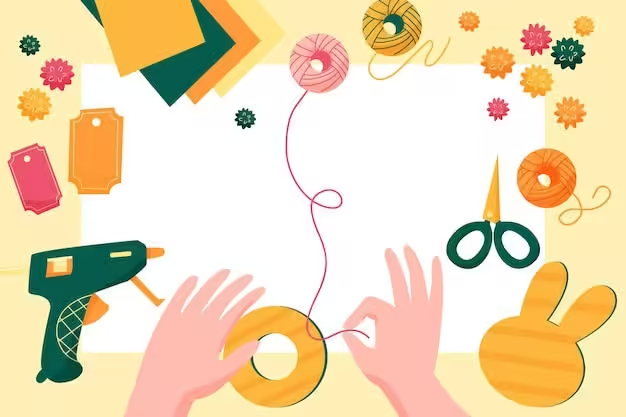
Fine motor skill development involves a child’s ability to use small muscles, particularly in their hands and fingers. Examples include picking up small objects, holding a fork, turning pages in a book, and using a pencil to doodle.
5. Gross Motor Skill Development
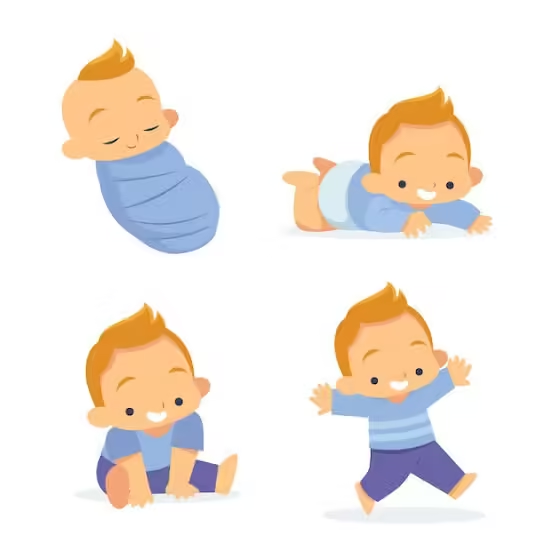
Gross motor skill development involves a child’s ability to use large muscles. Examples include a six-month-old baby learning to sit up with support, a 12-month-old baby pulling up to stand holding onto furniture, and a five-year-old learning to jump.
Skills Children Develop at Different Ages
Infants (0-12)
• Cognitive: Exploring environment with hands and eyes.
• Social and Emotional: Smiling, responding to familiar faces.
• Speech and Language: Babbling, saying first words.
• Fine Motor: Grasping objects, turning head.
• Gross Motor: Rolling over, sitting with support.
Toddlers (1-3 Years)
• Cognitive: Understanding cause and effect, recognising objects.
• Social and Emotional: Showing affection, beginning to assert independence.
• Speech and Language: Naming body parts, forming simple sentences.
• Fine Motor: Stacking blocks, using a spoon.
• Gross Motor: Walking, running, climbing.
Preschoolers (3-5 Years)
• Cognitive: Counting, recognizing letters and numbers.
• Social and Emotional: Playing with peers, understanding rules.
• Speech and Language: Using complete sentences, telling stories.
• Fine Motor: Drawing shapes, using scissors.
• Gross Motor: Hopping, skipping, throwing and catching a ball.
School-Age Children (6-12 Years)
• Cognitive: Solving complex problems, reading fluently.
• Social and Emotional: Developing friendships, understanding others’ perspectives.
• Speech and Language: Using more complex grammar, expanding vocabulary.
• Fine Motor: Writing neatly, playing musical instruments.
• Gross Motor: Participating in sports, riding a bike.
Adolescents (13-18 Years)
• Cognitive: Abstract thinking, planning for the future.
• Social and Emotional: Developing a sense of identity, managing emotions.
• Speech and Language: Engaging in debates, writing essays.
• Fine Motor: Refining skills in hobbies, such as painting or playing instruments.
• Gross Motor: Achieving physical milestones in sports, coordination and balance.
Conclusion





Pingback: VEGAN CHOCOLATE CUPCAKES WITH EASY FROSTING- THE KNOWLEDGE LOOM